The most complete director’s viewfinder ever put in a pocket.
Forty cinema bodies with their real scan windows, your own lens kit on a roll, a library of 120+ true 3D LUTs you can export for any camera’s log, and five working modes — photo, video, exposure meter, LiDAR scanner and monitor calibrator.
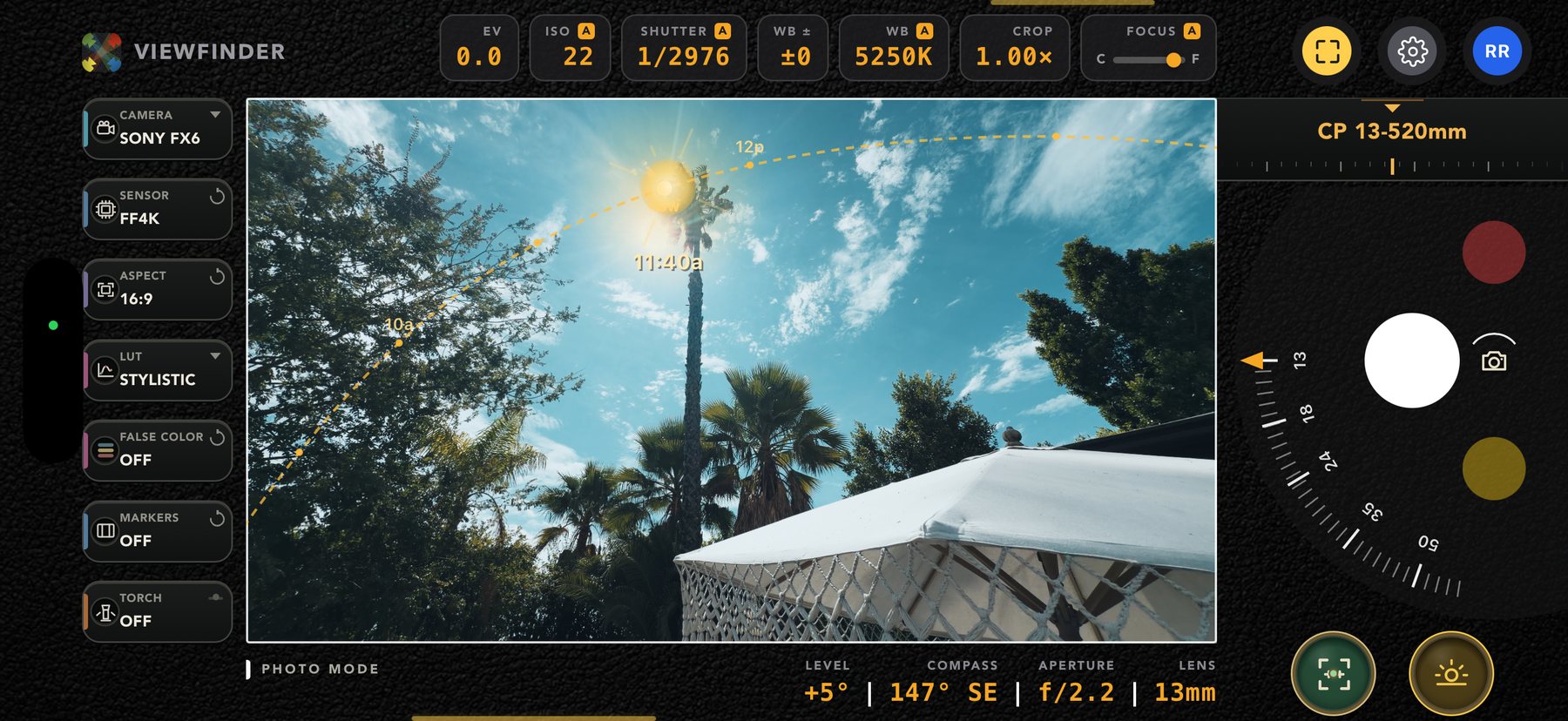
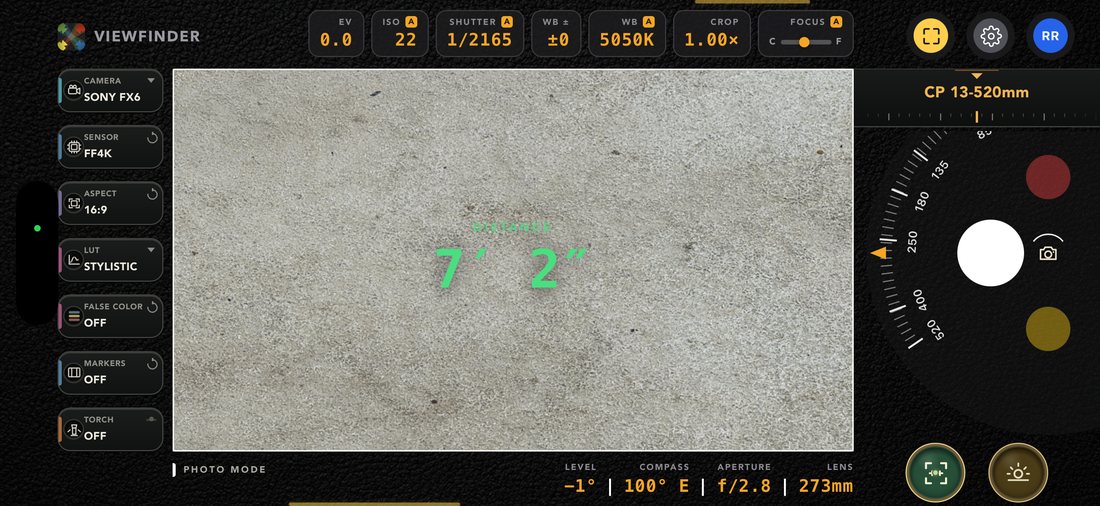
Photo mode · Sony FX6, FF4K window, CP 13–520mm at 13mm · Stylistic LUT · sun path over the frame
40+
Camera bodies
185
Sensor windows
5
Working modes
120+
LUTs in the library
The camera, not an approximation
Real bodies. Real scan windows. Real glass.
Most viewfinder apps hand you a crop factor and a focal length. This one starts from the sensor: every non-fixed body carries its actual selectable scan windows, each with the active image area in millimetres — published by the manufacturer where published, derived from the exact photosite ratio where not.
Bodies
Pick the camera you’re actually shooting
ARRI, RED, Sony, Canon, Blackmagic, DJI, Panasonic — plus broadcast chains, action cameras, and every recent iPhone, Galaxy and Pixel for when the phone is the camera.
Sensor windows
4.6K Open Gate isn’t “Super 35”
Cycle the body’s real modes — 4.6K 3:2 OG, 4K S35, 3.3K 6:5, 2K Super 16 — and the angle of view changes because the photosite window did. Delivery aspect crops inside that window, the way the camera does it.
Lens roll
Your kit, on an endless roll
Primes snap to their stop; zooms ride a focal-length wheel with real detents. Stock CP lenses are derived from your phone’s own native glass and relabelled for whichever window you picked. Add your own — or sign in and your show’s lens inventory is just there.
ARRI Alexa 35Alexa Mini LFAlexa 65RED V-Raptor 8K VVKomodo-XSony Venice 2 8.6KBuranoFX9FX6Canon C400C500 Mk IIURSA Mini Pro 12KPyxis 6KDJI Ronin 4D X9Varicam 35HDC-5500LDX 100UHK-X750… and 20+ more
One vertical reel
Five modes, one swipe apart
Photo is home. Swipe down for Video and the Groundplan Scanner, up for the Exposure Meter and the Monitor Calibrator. Every mode keeps the same frame, the same rail, the same capture button in the same place — only its colour, its glyph and its instruments change.
Photo mode
The frame, graded, with every number live
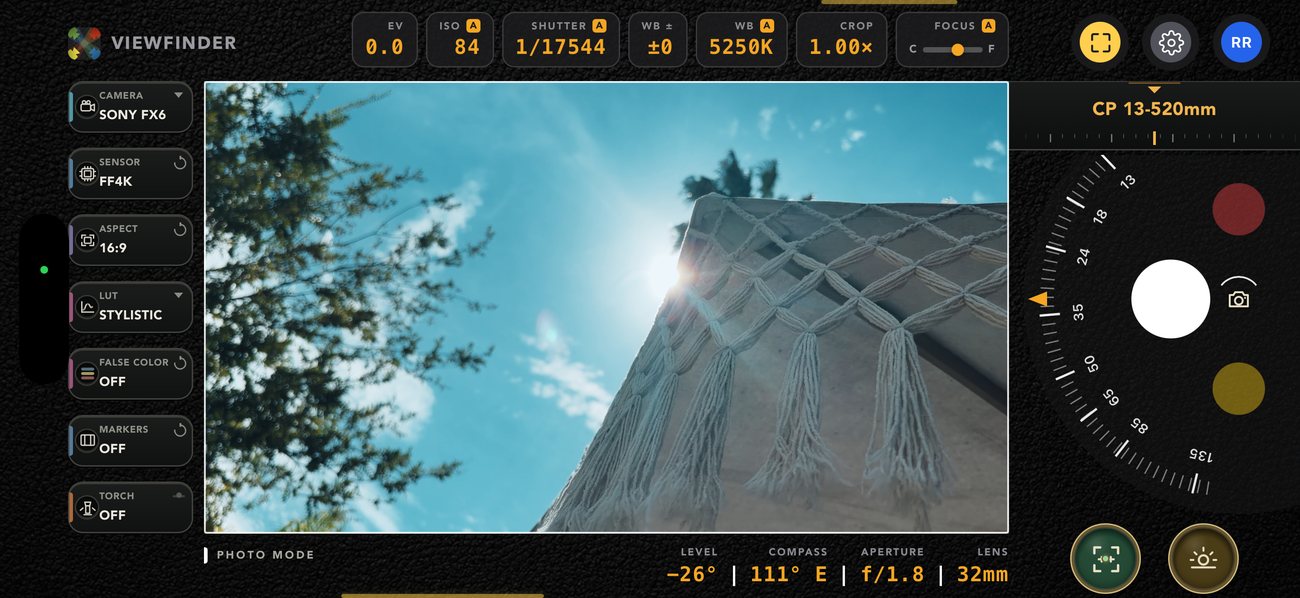
Hold the phone up and you are looking through the body you picked. The top row is the row you touch — hold and drag any readout to scrub it, long-press to switch what it means.
EV, ISO, shutter, white balance, WB ± and focus as live, draggable readouts
Tap to focus, hold to lock — and a vertical focus pad when you want it by hand
Level, compass, aperture and focal length reading out under the frame, information only
Crop 1.00×–2.00× in fifth-stops, on its own top control
Captures burn in the body, sensor mode, focal length and heading, save silently to Photos, and land in your viewfinder library
Video mode
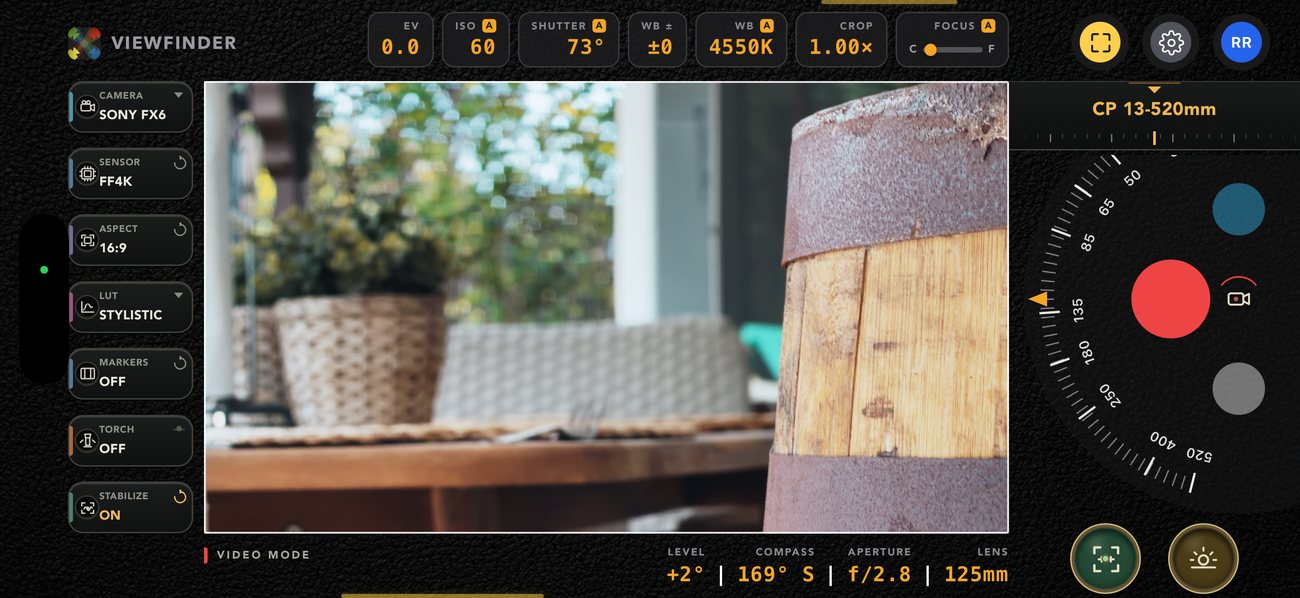
It records exactly what the monitor shows
The grade is not an overlay. Every delivered frame goes through the same Metal pipeline the preview uses and straight into the writer — so the LUT and the lens warp are baked into the file, not promised in post.
HEVC or H.264, 1080p or 4K, exact NTSC-rational frame rates locked natively — 23.976 by default
Shutter as a cinema angle — 45° through 360°, 172.8° included, converted against the project frame rate
Apple Log and Apple Log 2 10-bit capture on capable devices, straight off the top of the LUT list
Cine and Sport stabilisation that runs on a second capture output, so its look-ahead latency lives in the take and never in your monitor
AAC audio, portrait takes come out upright, saved to a CamPlot Videos album
Exposure meter
A handheld meter that reads the real scene
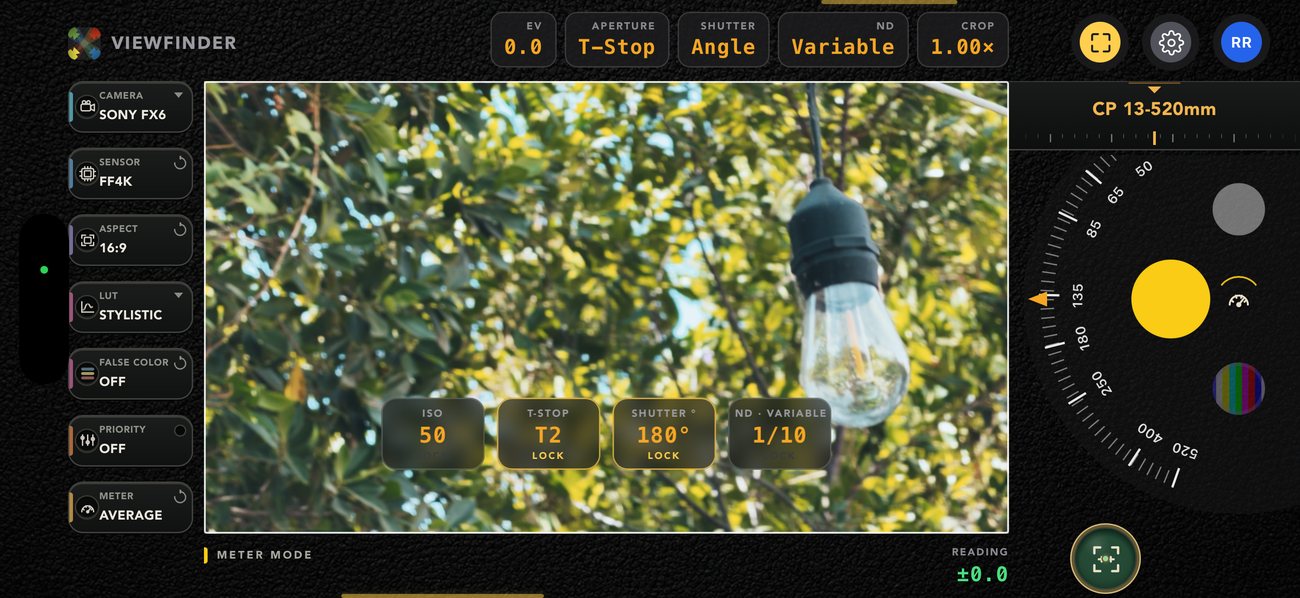
The phone’s own live telemetry becomes one target EV. Four interlocking dials sit over the frame as pure representations of it — lock what the production has already decided, and let the rest solve.
ISO, f-stop or T-stop, shutter angle or speed, and ND — variable, hard, or in stops. Long-press a dial to cycle what it is
A real priority cascade: unlock more than one dial and the highest-priority one absorbs the change first, rolling the remainder onward when it runs out of range
The ± stop discrepancy is eagerly live — it shows you the gap continuously, not only once everything has maxed out
Average or spot metering from the rail, like a real narrow-angle meter
Freeze the reading so it stops drifting while you dial, then save a reference frame with all four values and the EV burned in
Groundplan scanner
Walk the room. Leave with the plan.
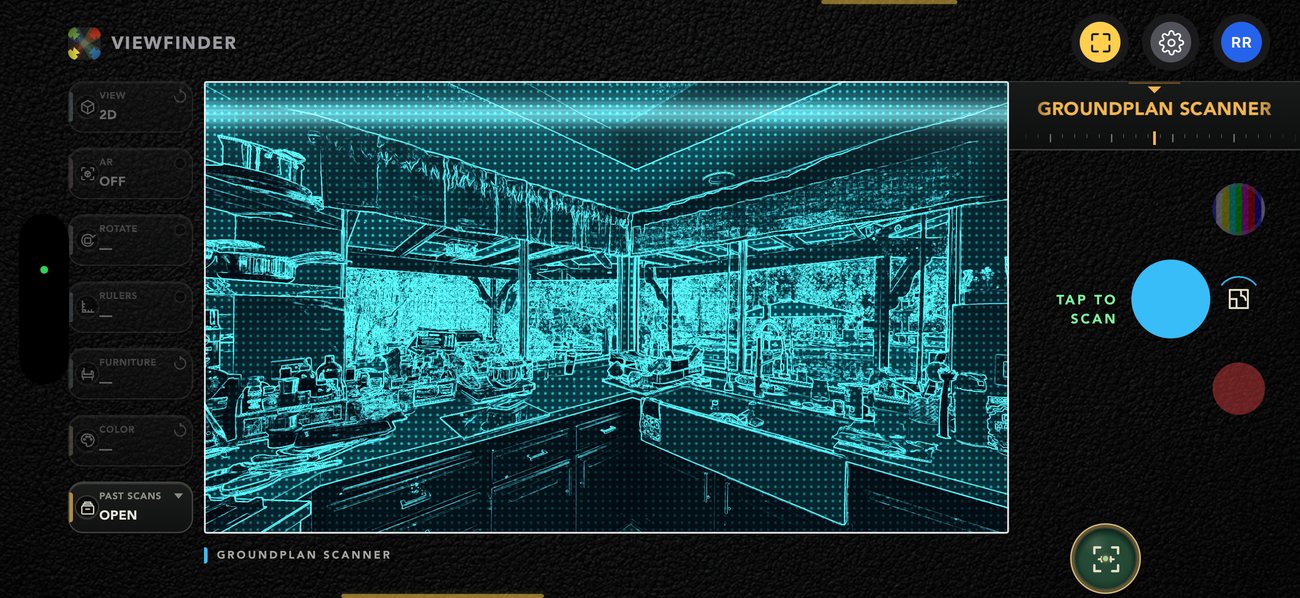
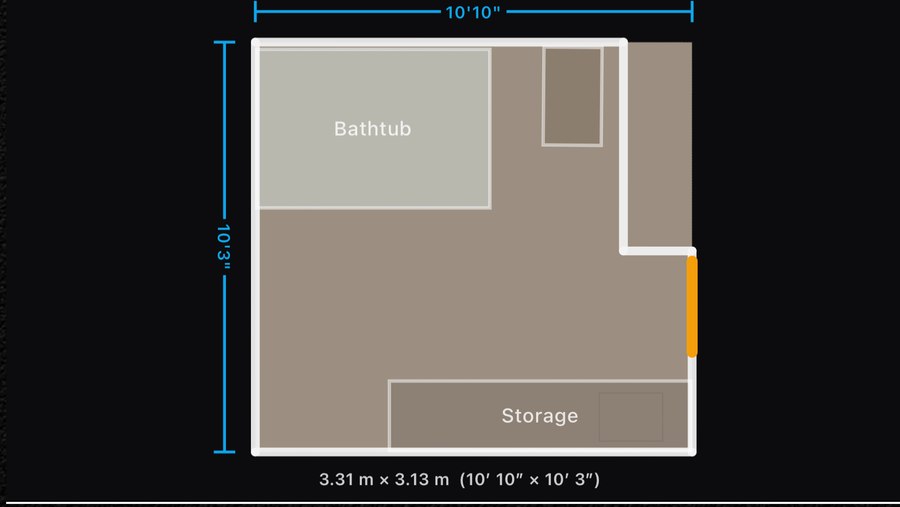
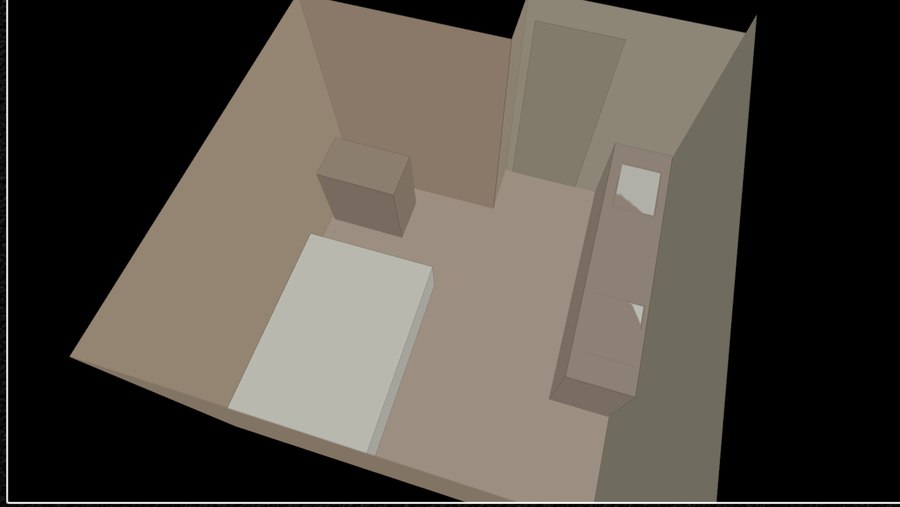
LiDAR scanning on Apple’s own RoomPlan coaching, handed straight into the finder’s frame for review — a dimensioned 2D plan and an orbitable 3D model of the same scan, both coloured from the room’s own camera.
2D or 3D from one scan, always opened with the longest wall horizontal, free to rotate from there
Rulers, and furniture ALL / NONE / SELECT — drop the couch nobody is shooting
Colour — clean white, or tinted with the actual colours the camera saw
Export USDZ or the 2D plan, view it in AR, or keep it in the on-device Past Scans library
Signed in, a scan saves straight into a CamPlot project’s groundplan library — pick the project and setup right there, then plot your cameras on it
Mid-scan, on the widest native lens
2D plan, dimensioned
The same scan, in 3D
Monitor calibrator
Tune a monitor in the language its menu already speaks
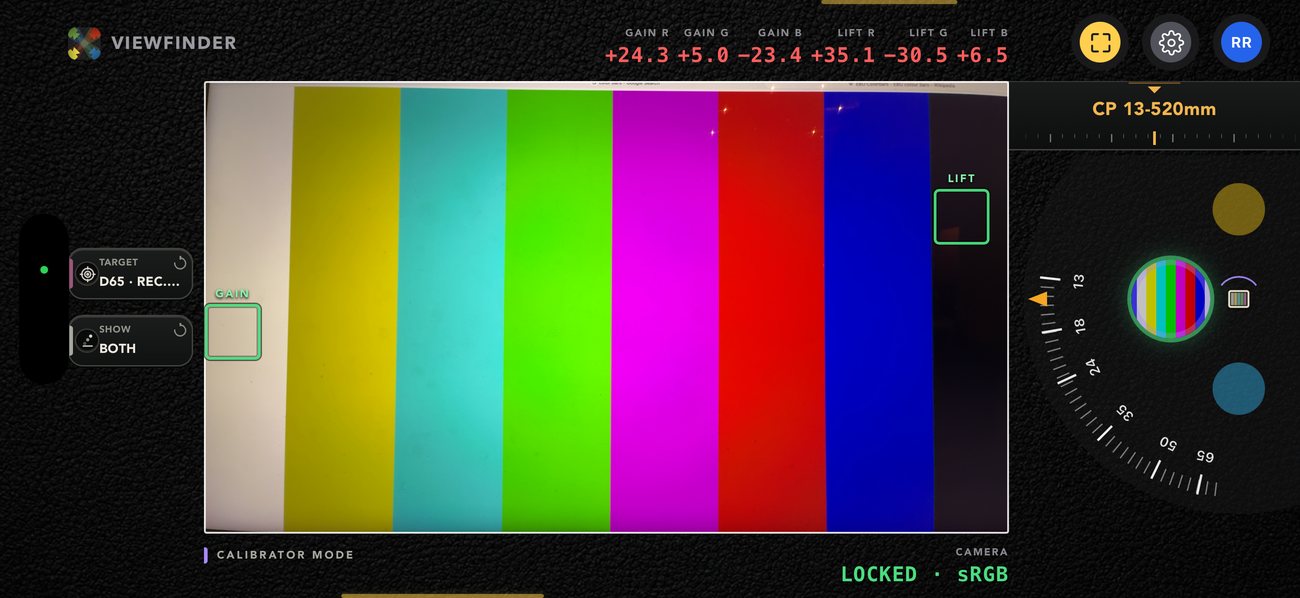
Point the phone at a monitor showing bars from its own source. Auto exposure, auto white balance and the colour space lock off entirely — the camera stops helping — and the readouts turn into the trims you actually reach for.
Full two-point greyscale — separate low and high tracking, each with its own R/G/B readout
±Red, ±Green, ±Blue gain and lift, the same six numbers a SmallHD calibration menu gives you
Your own reference targets, savable, with a D65 / Rec.709 default out of the box
Honest about what it is: guitar-tuner guidance, not lab colorimetry — a phone camera is not a probe, and the app says so
The look, before the shoot
A massive LUT library — and it leaves with you.
Every look in the finder is a true 3D LUT running on the GPU, and more than a hundred and twenty of them ship in the box. All of them are on the dial, shelf by shelf — scrub them under your thumb until the frame is right — then export that look already converted for the camera you’re shooting. The way you see it on the app is the way you get it on your cinema camera.
The library
A hundred and twenty-plus looks, nine packs
Movie Inspired, Filmic, Vintage, Contemporary, Expedition, Avant-Garde, Vibrant, Single-Tone and Influencers — each pack a drawer in Settings, with a search box across all of them. CamPlot’s own Pop, Stylistic and Cinematic sit at the top, and four slots take your own .cube files. The whole library is cached on the phone, so it works with no signal.
The dial
Thirty on the dial, one thumb
The whole library lives on the LUT widget, shelf by shelf. Touch it and hold: a reel comes out under your finger — drag up and down through the looks, left and right through the shelves, which recycle so neither direction dead-ends. The picture regrades live at every stop, so you find a look by looking rather than by reading names. A shelf of up to ten favourites sits right after System for the ones you keep coming back to. 709 is always the clean feed at the top; in Video on a capable iPhone, Apple Log and Apple Log 2 sit above it and record true log instead.
Export
Any look, in your camera’s log
Every look is a Rec.709 grade, and no cinema camera takes one of those — Sony wants S-Log3 going in, Canon C-Log3, an Alexa LogC4. So Export asks which camera, then composes the manufacturer’s own log→709 conversion first and the look second — the correct order, never the reverse — and hands you a single plain-ASCII .cube that in-camera parsers accept. Load it as a monitoring LUT and the image matches the frame you graded on the phone.
Export bases — the manufacturers’ own conversions
Apple LogApple Log 2ARRI LogC3ARRI LogC4Sony S-Log3Sony S-Log2Canon C-Log3Canon C-Log2Canon C-LogPanasonic V-LogFujifilm F-LogF-Log2F-Log2CNikon N-LogRED Log3G10Blackmagic Film Gen 5DJI D-LogDJI D-Log M
Eighteen bases, ten manufacturers · composed on a 33³ lattice · delivered as “Tron - S-Log3.cube”
On the rail, in the frame
Everything else it does
The widget rail changes with the mode, so each one only ever shows you the instruments that mode actually has.
True 3D LUTs
A library of 120+ looks, CamPlot’s own Pop, Stylistic and Cinematic, and four slots for your own .cube files — applied on the GPU, exactly as your DIT would. The library & export →
False colour, two scales
ARRI’s published colour-spectrum scale or a full spectrum ramp — near-black clip, 18% grey and skin sitting exactly where you expect them.
Sun path over the frame
Today’s arc or any future date’s, from your location and the compass. A soft sun rides the arc as you pan and tilt, telling you the hour it lands there.
LiDAR distance
On Pro iPhones, aim and tap for feet and inches to your subject — with an optional surveyor’s cross showing exactly which point it reads.
Frame markers
1:1, 4:3, 16:9, 2.35, 2.39 and 9:16 drawn inside your frame with the outside shaded — so you can see what the vertical cutdown gets.
Hardware shutter
Volume up, volume down and the Camera Control button all fire the capture — and press again during the review window to save. Slim amber lines show you where they are.
Level & compass, instantly
Fed natively from CoreMotion, so the horizon angle and the heading are alive the moment the finder opens — no tapping the screen to wake them.
Torch, not a strobe
A continuous, brightness-adjustable light in both Photo and Video — the way you would actually use a light, not a flash you can never see through.
Captures that remember
Body, sensor mode, focal length and heading burned into the file. Signed in, a scout frame can go straight onto the right camera on your plot.
Opens with no signal
The app boots from its own copy on the device. Bad hotel wifi, a stage with no bars, airplane mode — it opens instantly anyway.
Settings that stick
Default mode and camera, crop behaviour, LUT base, reverse wheel, recording resolution and codec, scanner defaults — set once, and that is how it opens.
Your kit, synced
Sign in and your show’s lens inventory, cameras and projects come with you — one account across the Viewfinder, the Calculators and all of CamPlot.
On the scout
Measure it, frame it, take it home.
A location survey used to be a tape measure, a phone camera and a notebook that made sense to nobody else. Here it is one pass: measure the throw, frame the shot through the body you are actually bringing, scan the room, and walk out with the plan and the frames already attached to the project.
LiDAR · 7′ 2″ to the wall
Pricing
Free to open. One account for everything.
The app runs without an account on a generic full-frame body and a demo lens range, so you can see the whole thing before deciding. The same subscription unlocks the Calculators app and all of CamPlot.
Free
$0 forever
No account needed
The full viewfinder interface
Generic full-frame body
Demo lens range
Every mode visible, so you know what you’re getting
Open it and look
View+
$29.99/yr
or $3.99/month
Every camera body and sensor window
All five modes unlocked
Your own lens kits, the whole LUT library and LUT export
Sun path, LiDAR, captures and scans
The four CamPlot Calculators
Markup and PDF export on plots shared with you
The whole field kit
Creator
$49.99/yr
or $4.99/month · free trial included
Everything in View+
Create and share overhead camera plots
Lens-accurate FOV, movement, jib and dolly
Live crew sharing and camera reports
Scans save into your projects’ groundplan libraries
The full CamPlot
CamPlot Director’s Viewfinder
Every camera. Every lens. Five modes. One iPhone.
Free to try, no account needed. Built by a working director, used on network productions.